
You set your alarm for 7 hours. You actually went to bed on time. But when that alarm goes off, you still feel like you’ve been hit by a truck. Sound familiar?
The problem usually isn’t how long you’re sleeping — it’s how well. And that’s exactly what sleep hygiene tips are designed to fix.
Sleep hygiene is the set of daily habits that either protect your sleep or slowly destroy it. The good news? Small changes add up fast. Here are 8 practical habits that genuinely improve sleep quality and help you wake up feeling like an actual human again.
What Is Sleep Hygiene (And Why Your Sleep Quality Depends on It)
Sleep hygiene refers to the behaviors and environment that shape how well you sleep. Think of it as your sleep routine for adults — the things you do (and don’t do) that signal your brain whether it’s time to rest or stay wired.
Poor sleep hygiene doesn’t just leave you tired. Over time, it disrupts your circadian rhythm, reduces the amount of deep and REM sleep you get, and can lead to chronic sleep issues that feel impossible to shake.
The encouraging part? You don’t need medication or fancy gadgets. Most better sleep habits are free and surprisingly simple.
8 Sleep Hygiene Tips That Actually Improve Sleep Quality
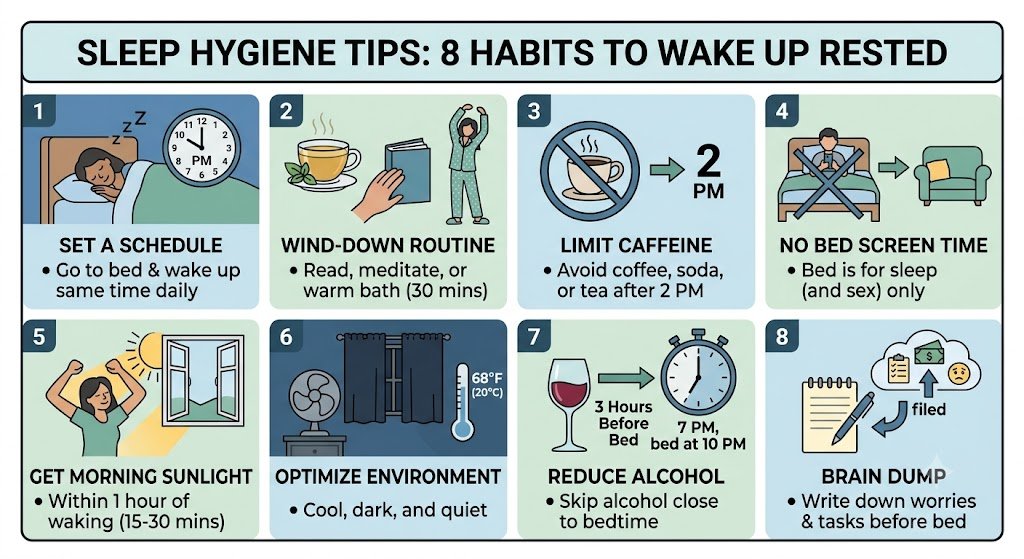
1. Set a Sleep Schedule and Stick to It — Even on Weekends
Your body runs on a biological clock. When you sleep and wake at different times every day, that clock gets confused, and your sleep quality tanks.
Pick a consistent wake-up time and protect it. It doesn’t matter if it’s a Tuesday or a Sunday. Within a few weeks, your body will start naturally feeling sleepy at the right time, making it far easier to fall asleep fast and wake up rested.
This single habit is one of the most powerful sleep hygiene tips and it costs you absolutely nothing.
2. Build a 30-Minute Wind-Down Routine Before Bed
Your brain can’t go from full speed to deep sleep in five minutes. It needs a transition period.
About 30 minutes before bed, start winding down. This could be light stretching, reading a physical book, journaling, or a warm shower. The specific activity matters less than the consistency. Do it every night, and your brain learns that this routine means sleep is coming — making it easier to fall asleep without lying there staring at the ceiling.
3. Cut Off Caffeine Earlier Than You Think
Most people know caffeine affects sleep. But not everyone knows that caffeine has a half-life of about 5 to 7 hours. So that 3 PM coffee? It’s still working in your system at 9 PM.
A solid sleep hygiene rule: no caffeine after 1–2 PM if you want to be asleep by 10–11 PM. This includes energy drinks, pre-workouts, some teas, and even dark chocolate in large amounts. Try it for a week — the difference in how deep you sleep is often dramatic.
4. Stop Using Your Bed for Netflix and Scrolling
This one is tough, but it matters. When you use your bed for watching TV, working, or doomscrolling, your brain starts associating your bed with alertness — not rest.
The fix is simple: use your bed only for sleep (and sex). That’s it. Over time, this rebuilds the mental connection between your bed and actually feeling sleepy. It’s a core part of sleep hygiene for adults and one of the most recommended changes by sleep specialists worldwide.
5. Get Morning Sunlight Within an Hour of Waking Up
Here’s something most sleep tips skip: what you do in the morning directly affects how well you sleep at night.
Natural light exposure first thing in the morning sets your circadian clock for the day. It signals your body to stop producing melatonin and start the 14–16 hour timer that eventually makes you feel sleepy at night again.
Step outside for even 10–15 minutes in the morning, without sunglasses if it’s safe. This one habit can noticeably improve sleep quality within a few days.
6. Keep Your Bedroom Cool, Dark, and Quiet
Your sleep environment is part of your sleep hygiene routine — and it’s easier to optimize than most people think.
- Temperature: 65–68°F (18–20°C) is the sweet spot for most adults. A cool room encourages your body temperature to drop, which is what triggers deep sleep.
- Light: Use blackout curtains or a sleep mask. Even small amounts of light can reduce melatonin production.
- Noise: White noise machines, earplugs, or a simple fan can mask disruptive sounds without much effort.
Your bedroom should feel like a cave — and that’s a compliment. effort.
7. Limit Alcohol Close to Bedtime
A lot of people use alcohol to wind down, and while it does help you fall asleep faster, it seriously disrupts sleep quality in the second half of the night.
Alcohol suppresses REM sleep, which is the stage your brain needs for memory, emotional regulation, and feeling genuinely rested. You might sleep 8 hours after a couple of drinks and still wake up foggy and drained.
Try keeping alcohol to at least 3 hours before bed. You’ll notice a real difference in how refreshed you feel in the morning.
8. Write Down What's Stressing You Before Bed
Racing thoughts are one of the biggest reasons people can’t fall asleep. Your brain keeps running through worries, to-do lists, and unfinished thoughts because it’s trying to “file” everything before shutting down.
Give it a head start. Spend 5 minutes before bed doing a “brain dump” — write down tomorrow’s tasks, anything you’re worried about, or whatever’s bouncing around in your head. Research shows this reduces cognitive arousal at night and helps you fall asleep faster. It sounds too simple, but it genuinely works.
How Long Does It Take to See Results from Better Sleep Habits?
Most people notice a real improvement in sleep quality within 1–2 weeks of consistently applying these sleep hygiene tips. Some habits — like the sleep schedule and morning sunlight — can show results in just a few days. The key is consistency. These aren’t one-night fixes; they’re a sleep routine for adults designed to rewire your body’s natural rhythm over time.
FAQ: Sleep Hygiene Questions Answered
What is sleep hygiene? Sleep hygiene refers to a set of daily behaviors and environmental factors that influence how well you sleep. It includes your bedtime routine, sleeping environment, diet, and daytime habits.
How many hours of sleep do adults need? Most adults need 7–9 hours of sleep per night. However, quality matters just as much as quantity — poor sleep hygiene can leave you tired even after 9 hours.
Can sleep hygiene tips help with insomnia? Yes. In fact, Cognitive Behavioral Therapy for Insomnia (CBT-I), which is the most effective insomnia treatment, is built heavily around sleep hygiene practices. For mild to moderate sleep issues, these habits often eliminate the problem entirely without medication.
What’s the best bedtime for adults? There’s no universal “best” time — what matters is consistency. Pick a sleep and wake time that works for your schedule and stick to it every day.
The Bottom Line
Better sleep isn’t about sleeping longer — it’s about sleeping smarter. These sleep hygiene tips won’t transform your nights in 24 hours, but give them two weeks and you’ll likely feel like a different person. Start with two or three changes that feel manageable and build from there.
Your future self — the one who wakes up actually rested — will thank you.