
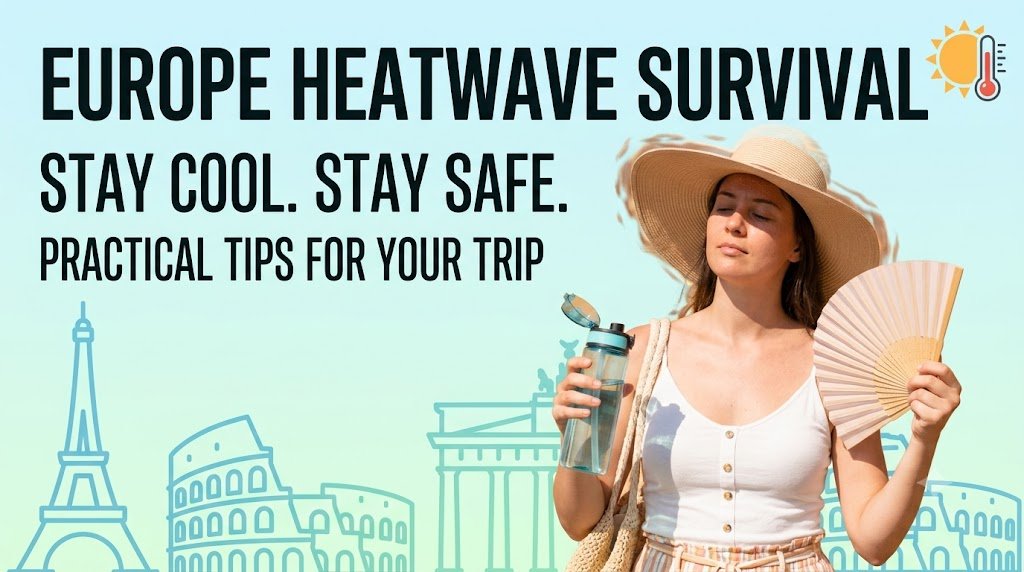
If you’ve got a European trip booked for this summer, you’ve probably already seen the headlines. Records falling in France. Red alerts across the UK, Spain, Germany, and Switzerland. The Eiffel Tower closing early. Flights delayed by the thousands. It’s a lot, and if you’re wondering whether you should still go, you’re not alone.
Here’s the short answer: yes, you can still travel to Europe during this heatwave — but you need to travel differently than you would in a normal summer. This guide walks through exactly how to do that, based on what’s actually happening on the ground right now, not recycled advice from five years ago.
What's Actually Happening Right Now
Since late May 2026, Europe has been sitting under what meteorologists call an “omega block” — a stubborn high-pressure system that traps hot air in place and just… doesn’t move. Temperature records have broken across Belgium, France, Germany, Hungary, Romania, Ireland, Italy, the Netherlands, Poland, Czechia, Denmark, Spain, and the United Kingdom.
Red alerts are currently in force across the UK, France, Spain, Germany, Switzerland, and Luxembourg, and the extreme heat that first hit France and Spain has since pushed east into Germany, Italy, and the Balkans. Some cities have had to make hard calls: Spain now requires bars and restaurants to close outdoor terraces during official heat alerts unless they have shade or misting systems, and hospitality workers must be given cold water and lighter uniforms. Paris banned alcohol at public gatherings for safety reasons, and the Eiffel Tower has been closing early.
This isn’t a one-off bad week, either. The World Health Organization estimates more than 200,000 people have died from extreme heat across the EU over the past four years, and health officials are urging travelers and governments alike to take the risk seriously.
None of this means Europe is closed. It means the way you travel needs to change a bit.
Is It Actually Safe to Travel to Europe Right Now?
Mostly, yes — with real precautions. Cities remain open, but the heat itself is dangerous, so the standard advice is to avoid midday activity, follow local red and amber alerts, and stay away from woodland or mountain areas where wildfire risk is high. You don’t need to cancel your city break, but this might be the summer you skip the all-day hike or the theme park marathon.
The people at greatest risk are older travelers, young children, pregnant women, and anyone with a heart or respiratory condition — if that’s you or someone in your group, it’s worth being extra cautious about outdoor plans between late morning and early evening.
How to Stay Cool: Practical Tips That Actually Work
Plan around the sun, not your itinerary. Health authorities recommend staying in air-conditioned spaces and avoiding direct sun exposure between 11am and 6pm. Flip your day: museums and indoor attractions during peak heat, outdoor sightseeing early morning or after dinner when it’s cooler.
Check your accommodation’s cooling before you book — not after you arrive. A lot of Europe’s older, historic buildings simply weren’t built with modern air conditioning in mind, so it’s worth verifying cooling capacity before you confirm any reservation. A “charming 400-year-old building” listing is a red flag in a heatwave, not a selling point.
Water is your best friend. Keep constant access to water, use public fountains where you can, and skip the alcohol — it speeds up dehydration exactly when you can least afford it.
Pack like you mean it. For a European trip during heatwave season, you’ll want light, breathable clothing, a refillable water bottle, a personal fan, a cooling towel, SPF 50+ sunscreen, a wide-brimmed hat, UV-blocking sunglasses, and electrolyte packets. None of it takes up much suitcase space, and all of it makes a real difference.
Build flexibility into your plans. Keep an eye on transport apps in real time and design your itinerary so you can pivot quickly if conditions get worse. Heat has already caused real transport chaos this summer — more than 3,100 flights were delayed or cancelled in a single 24-hour stretch in late June at airports including Amsterdam Schiphol, Zurich, Rome, and Athens, and France’s rail network has cancelled intercity trains after heat damaged the overhead lines.
Know the warning signs of heat illness. Feeling faint, dizzy, or confused, a racing heart, or hot skin that isn’t sweating are all signals to stop, get somewhere cool, and get water into your system immediately. Don’t push through it and hope it passes.
Should You Change Your Travel Dates?
If your plans are still flexible, it’s worth thinking about timing. April–May and September–October have traditionally been cooler, less crowded, and cheaper across Europe — though even May 2026 saw an early heatwave with temperatures 10–15°C above normal, so no window is a guaranteed escape anymore. That said, your odds of hitting a 44°C day in Rome are still meaningfully lower in October than in the middle of July, and southern Europe in autumn remains one of the more comfortable times to visit.
If you’d rather sidestep the heat entirely this summer, northern destinations like Norway, Iceland, and Finland have largely avoided the worst of it.
What About Flight Delays and Insurance?
Worth knowing before you fly: standard travel insurance policies typically don’t cover heatwave-related cancellations, so if you want protection against changing your mind due to extreme heat, look specifically for a “Cancel For Any Reason” (CFAR) upgrade. And if your flight does get delayed or cancelled because of the weather, you’re usually entitled to rebooking or a refund under EU rules, but not automatic cash compensation, since extreme weather counts as an “extraordinary circumstance.”
The Bottom Line
Europe’s 2026 heatwave is real, and it’s serious — but it doesn’t have to derail your trip. Book accommodation with genuine air conditioning, plan your sightseeing around the coolest hours of the day, pack smart, stay hydrated, and keep half an eye on local alerts and transport updates. Do that, and there’s no reason you can’t still have the trip you planned — just a slightly smarter, slightly slower version of it.
Frequently Asked Questions
Is it safe to travel to Spain, Italy, or France right now? Cities remain open and functioning, but the heat is genuinely dangerous. Avoid midday activity, follow local alerts, and stay away from high wildfire-risk areas.
Will the heatwave affect my flights or trains? Possibly. Heat has already disrupted thousands of flights and forced train cancellations in several countries this summer. Check your transport provider’s app regularly in the days before you travel.
What’s the best time to visit Europe to avoid the heat? Historically, late September through October, and April through May. Neither is a guarantee anymore, but autumn remains noticeably cooler and less crowded.
Does travel insurance cover heatwave cancellations? Usually not by default — look for a Cancel For Any Reason add-on if that matters to you.
Heading to Europe soon? Bookmark this guide and check local weather alerts a few days before you fly — conditions are shifting fast this summer.